

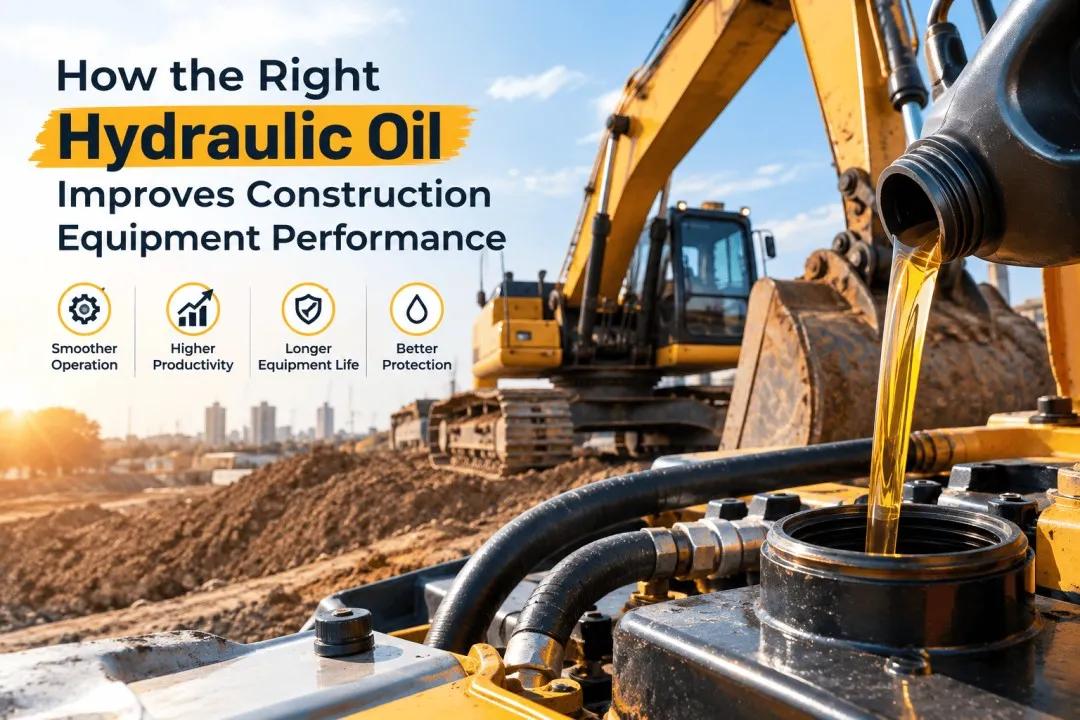
Construction equipment has to perform under demanding conditions. Excavators, loaders, cranes, forklifts, and other heavy machines often work for long hours while handling significant loads. Behind much of this movement is the hydraulic system, and the condition of its hydraulic oil can have a direct impact on equipment performance.
The right hydraulic oil helps construction equipment operate smoothly by reducing friction and wear, maintaining hydraulic pressure, managing heat, and protecting important components. In the UAE, where high temperatures and demanding operating conditions are common, choosing the right lubricant becomes even more important.
What Does Hydraulic Oil Do?
Hydraulic oil is more than a fluid that moves through pipes and hoses. It acts as the working medium that transfers power from the hydraulic pump to components such as cylinders, motors, and valves.
At the same time, it lubricates moving parts, helps carry away heat, protects against corrosion, and supports the overall cleanliness of the hydraulic system.
When the oil is correctly matched to the equipment, these functions work together to keep the machine responsive and reliable. On the other hand, using an unsuitable oil can contribute to overheating, excessive wear, pressure problems, and premature component failure.
How the Right Hydraulic Oil Improves Equipment Performance
Better Hydraulic System Efficiency
Construction equipment relies on hydraulic pressure for many of its essential functions, from lifting heavy materials to operating excavator arms and loader buckets.
Hydraulic oil with the appropriate viscosity can flow effectively through the system while maintaining the pressure needed for these operations. This allows pumps, valves, and cylinders to work more efficiently and helps maintain smooth equipment movement.
If the oil is too thick or too thin for the application, the system may not perform as intended. That's why the manufacturer's recommended specification should always be the starting point when choosing a lubricant.
Less Wear on Hydraulic Components
Hydraulic pumps, valves, cylinders, and motors operate under considerable pressure and mechanical stress. Continuous operation without adequate lubrication can accelerate wear on these components.
A suitable hydraulic oil creates a lubricating film between moving surfaces, helping reduce friction and protect components during demanding operating cycles.
This doesn't eliminate the need for maintenance, but it can help equipment components operate reliably for longer and reduce the likelihood of avoidable repairs.
Improved Heat Management
Heat is a natural by-product of hydraulic system operation. The problem begins when temperatures become excessive.
High temperatures can accelerate oil oxidation and affect seals, hoses, pumps, and other components. Hydraulic oil helps carry heat away from working components and supports temperature control within the system.
For construction machinery operating in the UAE, this is an important consideration. Equipment may spend long periods working outdoors, making thermal stability and the correct oil specification particularly relevant.
Reduced Risk of Unexpected Downtime
A hydraulic problem can bring an entire piece of construction equipment to a stop. For contractors, that can mean delayed work, additional labour costs, and unexpected repair expenses.
Using the correct oil is one part of a broader preventive maintenance strategy. Regularly checking fluid levels, inspecting for leaks, replacing filters, and monitoring oil condition can help identify problems before they develop into serious failures.
Good lubrication practices are therefore not simply about protecting the oil. They are about keeping the machine available when the job requires it.
Choosing Hydraulic Oil for UAE Construction Conditions
The operating environment should always be considered when selecting hydraulic oil. Construction equipment in the UAE can face high ambient temperatures, dust, heavy workloads, and extended operating cycles.
However, the hottest available oil is not automatically the right choice. The lubricant must meet the specifications recommended by the equipment manufacturer. Viscosity, anti-wear performance, oxidation stability, temperature range, and compatibility with system components should all be considered.
It is also important to avoid choosing a product based only on price. A lubricant that appears cheaper initially may prove more expensive if it contributes to frequent maintenance or component problems.
Simple Hydraulic Oil Maintenance Practices
Even a high-quality lubricant cannot compensate for poor maintenance. Equipment operators should regularly check hydraulic oil levels and look for signs of leakage or contamination.
Hydraulic filters should be replaced at the recommended intervals, while oil condition should be monitored when equipment operates under particularly demanding conditions. Oil analysis can also provide useful information about contamination, viscosity changes, and potential component wear.
Another important practice is avoiding the unnecessary mixing of different hydraulic oils. If a change in lubricant is required, compatibility should be confirmed with the equipment or lubricant manufacturer.
Why Choose Experienced Automotive Lubricant Suppliers in UAE?
Selecting the right lubricant can be challenging when a business operates different types of machinery. Experienced automotive lubricant suppliers in UAE can help businesses understand product specifications and identify suitable lubrication solutions for particular applications.
For construction companies, having access to the right lubricant and reliable technical guidance can make routine maintenance more straightforward and help reduce lubrication-related problems.
Improve Equipment Reliability With Apex Lube
The right hydraulic oil can make an important difference to construction equipment performance. It supports efficient power transfer, reduces friction and wear, helps manage operating temperatures, and protects critical hydraulic components.
For businesses operating heavy equipment in the UAE, the best approach is to combine the correct lubricant with regular inspection and preventive maintenance.
Apex Lube offers lubrication solutions for demanding automotive and industrial applications. If you need help selecting a suitable hydraulic lubricant for your equipment, contact our team today to discuss your application and lubrication requirements.
Frequently Asked Questions
1. What is hydraulic oil used for in construction equipment?
Hydraulic oil transfers power through the hydraulic system while also lubricating components, reducing wear, carrying heat, and helping protect internal parts from corrosion and oxidation.
2. How does hydraulic oil affect equipment performance?
The correct hydraulic oil helps maintain consistent hydraulic pressure and fluid flow while reducing friction and wear. This supports smoother operation and reliable equipment performance.
3. What hydraulic oil is suitable for the UAE climate?
The suitable oil depends on the equipment manufacturer's specifications and operating conditions. Viscosity, temperature range, anti-wear properties, and oxidation stability should all be considered rather than choosing a product based only on climate.
4. How often should hydraulic oil be replaced?
There is no single replacement interval for every machine. Follow the equipment manufacturer's recommendations and consider operating conditions, oil contamination, equipment usage, and oil analysis results when determining replacement requirements.
5. Can different hydraulic oils be mixed?
Different hydraulic oils should not be mixed without confirming compatibility. Mixing incompatible products can affect lubricant performance and may cause problems within the hydraulic system.